 SmartLockPro
Smart Locks for Homeowners
Keyless entry for your own front door — a code, an app, or a fingerprint, whichever suits how your household actually works. Fitted properly, and explained clearly, not left running on whatever the box defaults to.
From £199per installation
What you actually get out of it
The obvious one is never being locked out again. No spare under the plant pot, no emergency locksmith because your keys are on the kitchen table and the door swung shut behind you.
The less obvious ones tend to matter more day to day. Kids who come home from school before you do, without a key to lose. A cleaner who comes on Thursdays and only needs access on Thursdays. Letting a delivery driver put a parcel in the porch while you're at work. Family visiting for a weekend who get their own code instead of borrowing yours. A dog walker with access between eleven and one and no other time.
And when a tradesperson needs to get in while you're out, you're not leaving a key somewhere or taking a day off — you issue a code for that afternoon and see in the log when they arrived and left.
Which lock goes on your door
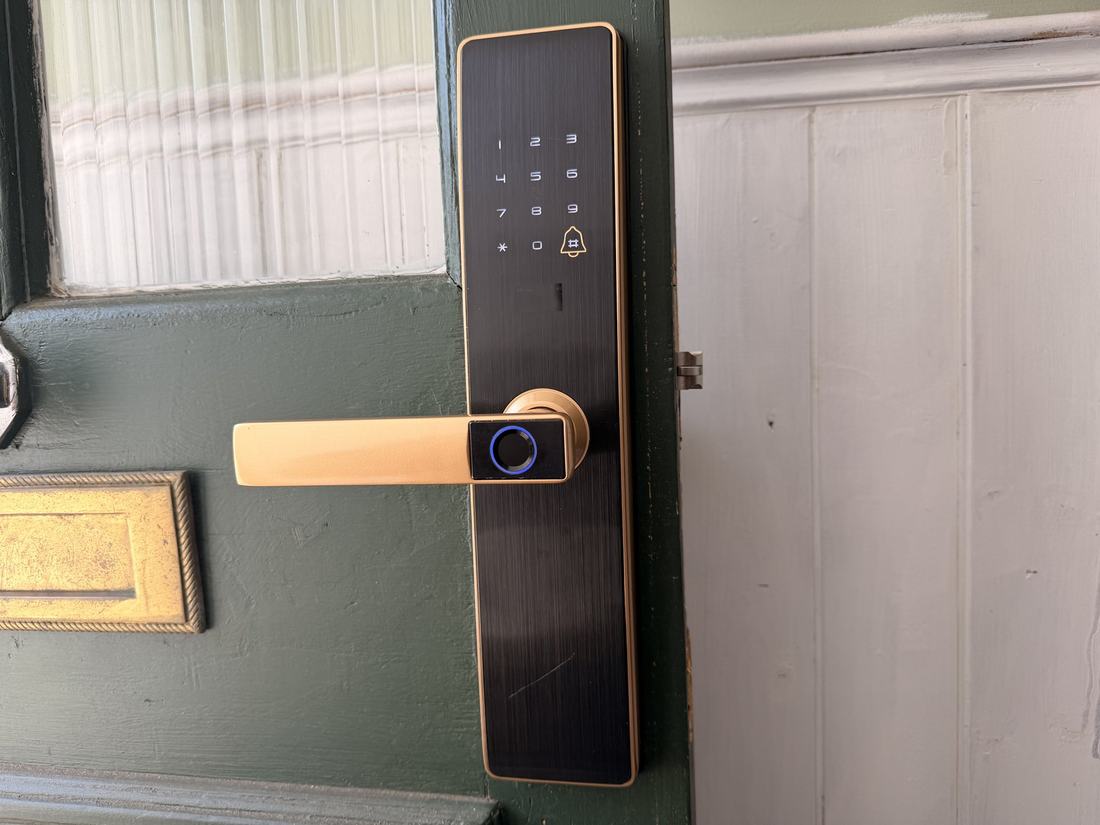
For a home, we most often fit Yale or Nuki. Yale because it is a name you already know and its smart range sits on a hundred and eighty years of lock-making; Nuki because it is beautifully made and fits over your existing cylinder, so the outside of your door barely changes.
We also fit August, Igloohome and TTLock. TTLock is the one we lead with for landlords and holiday lets, where issuing and expiring dozens of codes matters more than the badge on the front — it is a platform rather than a manufacturer, which is a strength there and usually the wrong trade-off on a family front door.
We will also fit a lock you have already bought, and tell you honestly if it is not right for your door before we start.
Why this is different from a DIY fit
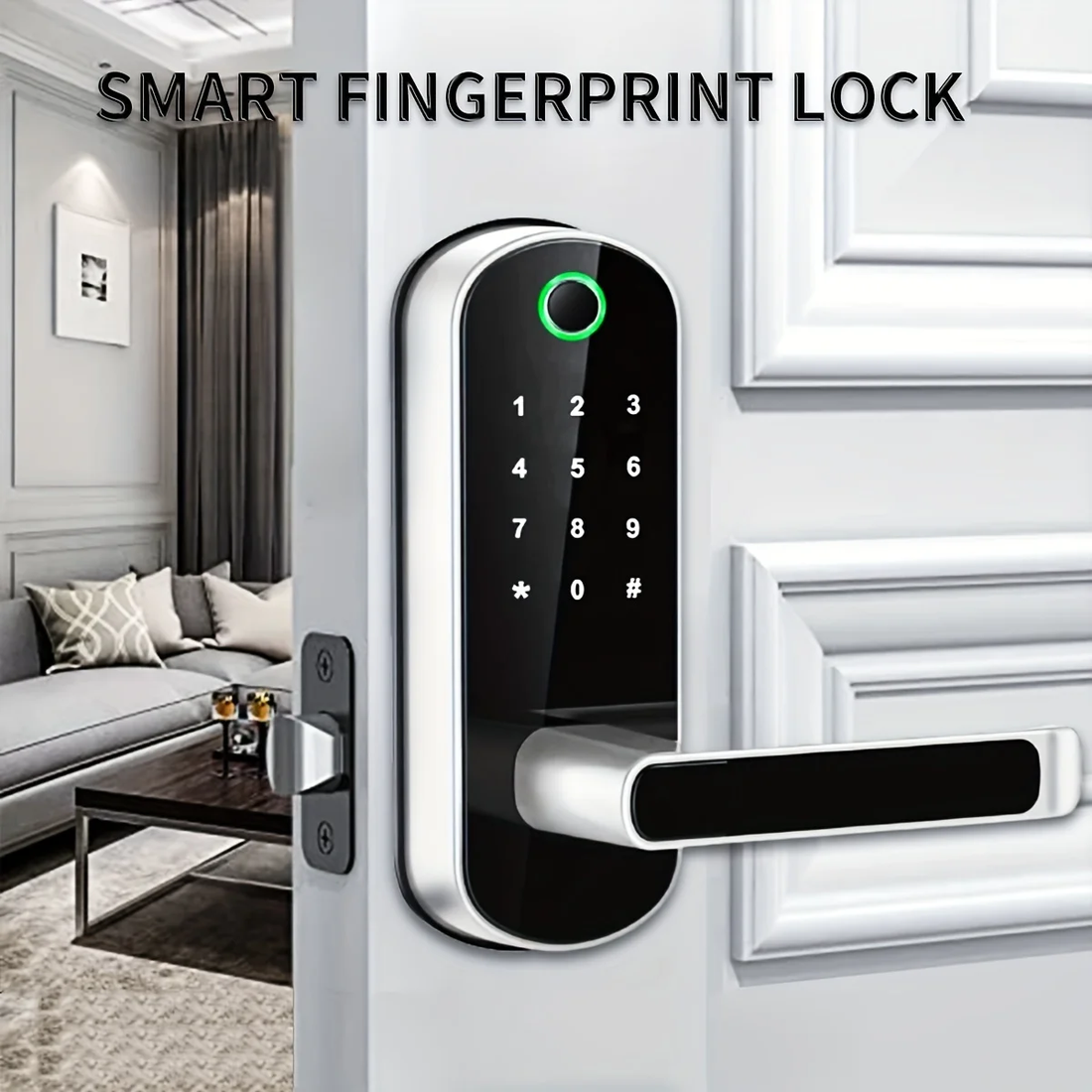
Smart locks arrive in the box able to do far more than a default PIN code — family member profiles, temporary codes for visitors or tradespeople, activity logs of who came and went. Most people fitting one themselves never get past the basic setup because the manufacturer apps aren't always intuitive. We set it up properly the first time and walk you through actually using it.
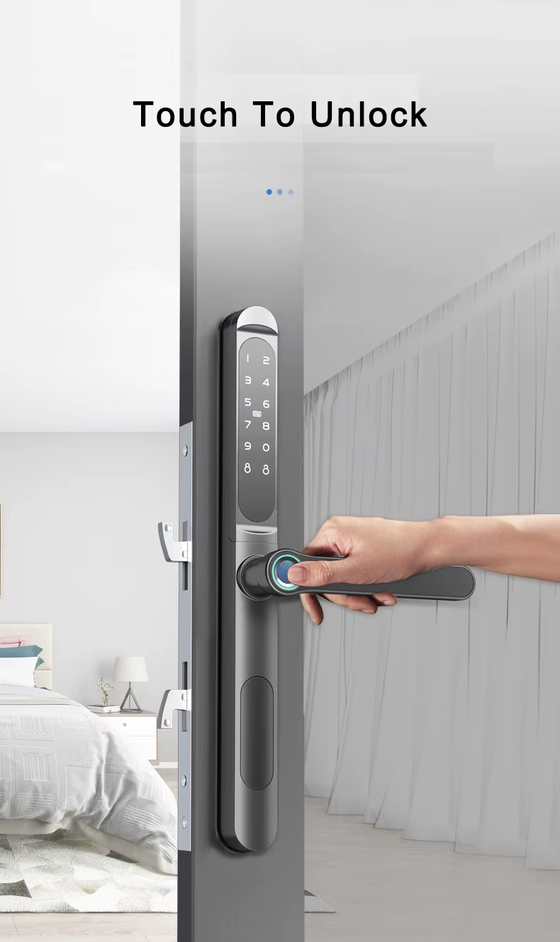
The other half of it is the door itself. A smart lock has to physically suit the door it's going on — the cylinder length has to be right, the multipoint mechanism has to actually engage, and the handle has to be the correct handing. Get any of those slightly wrong and the lock works, technically, while quietly chewing through batteries or failing to throw the bolts properly. That's the sort of thing that shows up six months later as 'the lock's gone faulty' when it was never fitted right.
Does it suit your door?
Most UK front doors fall into a few categories, and each has its own considerations:
- uPVC or composite with a multipoint lock — the most common setup on modern homes. Usually straightforward, but the euro cylinder needs measuring properly rather than guessed.
- Timber door with a euro cylinder — generally the easiest retrofit.
- Timber door with a night latch or mortice lock — often needs a different style of smart lock, or additional work to the door.
- Flat entrance doors — normally fine for your own door; communal entrances belong to the building and need the freeholder's agreement.
If you're not sure which you have, send us a photo when you get in touch and we'll tell you.
What it adds to your security
Most of our installs are retrofits. The certified cylinder stays exactly where it is, doing exactly what it did before — the smart lock turns it for you from the inside. Everything that made your door resist force still does, and the lock your insurance policy already refers to is still the lock on your door. We tell you in writing what we have fitted and what it is rated to, so you have it on record if you ever need it.
What you gain is the part a mechanical lock has never been able to help with. The door locks itself behind you, every time, so it stops mattering whether anyone remembered — and a door left on the latch is one of the most common ways homes are actually entered. Access becomes something you can hand out and take back in seconds instead of cutting another key you can never get back. And most of the locks we fit will sound an alarm at the door and push an alert to your phone if somebody starts interfering with them, which no ordinary lock has ever done.
Where a full replacement suits the door better than a retrofit, we say so, tell you what it is rated to before anything is ordered, and are happy to put that in writing for your insurer.
What's included
- Supply and fitting of your chosen smart lock
- Full app/account setup, not just the physical install
- Codes and access set up for your household
- Separate codes for cleaners, dog walkers, or family, on their own schedules
- Old lock removed and disposed of, or left with you if you'd rather keep it
- A walkthrough so everyone in the house knows how to use it
Questions
Frequently asked
Smart locks warn you well before the battery actually runs out, and most have an external charging point or physical key override so you're never locked out even if it does.
The lock itself works fine without WiFi for day-to-day use — a connection is only needed for remote features like checking activity logs from your phone away from home.
Yes — you can issue a time-limited code for a cleaner, dog walker, or tradesperson that expires automatically.
On a retrofit — which is most of what we do — no. Your existing certified lock stays on the door and keeps meeting the same standard; the smart lock simply turns it for you. We confirm in writing what is fitted and what it is rated to, so you have it on record. Where a full replacement is the better answer for your door, we tell you what it is rated to before you commit and will put it in writing for your insurer.
Fitted the way we fit them, no — and on the way homes are most often actually entered, it is better. Resisting force is the job of the cylinder, the bolts and the frame, and a retrofit leaves all three exactly as they were. What changes is that the door locks itself behind you, you can take access back without changing a lock, and you get told if somebody interferes with it. That is why we only fit locks we would put on our own doors — a cheap unit swapped in for a rated one is the version that goes wrong, and it is the version we decline.
It locks itself. You set how long after the door closes — usually a few seconds — and from then on it happens every time whether anyone remembered or not. On a multipoint door this is the big one: pulling the door to without lifting the handle and turning the key leaves it latched rather than locked, and auto-locking removes that possibility completely.
Most of the locks we fit watch for it. Sensors pick up impact or interference with the lock body, sound an alarm at the door, and push an alert to your phone — so you know while it is happening rather than when you get home. An alarm going off is also a real deterrent, because whoever is at your door is working on the assumption that nobody has noticed yet.
With a smart lock you delete their code and it is done — seconds, from wherever you are, and nobody else's access is disturbed. With a mechanical lock the only real answer is changing the cylinder, which means a visit, a cost, and new keys for everybody. It is also worth remembering that a key can be copied in minutes and the original tells you nothing.
On most retrofit installs where we reuse the existing cylinder, yes. On a full lock replacement you'll get new keys for the override. Tell us which you'd prefer and we'll spec accordingly.
- Speed
- Same-day installationSubject to availability in your area
- Pricing
- Fixed-price quotesAgreed before we start, no callout fee
- Guarantee
- 12-month workmanshipWe come back and fix it, no charge
- Coverage
- Northwest, and UK-wideDay-to-day in the Northwest; further for larger jobs — see coverage
Get a fixed price for your door
Tell us the property and we'll quote it — no callout fee, no obligation.