 SmartLockPro
Case Study: A Smart Lock On A Glazed Timber Front Door
A homeowner in south Manchester had a Yale keypad lock on his front door that had stopped working, and which he had never got on with anyway. He bought a replacement himself — a Vila 569 — and asked us to fit it. The lock was the easy part. The door was the job.
What was already on the door
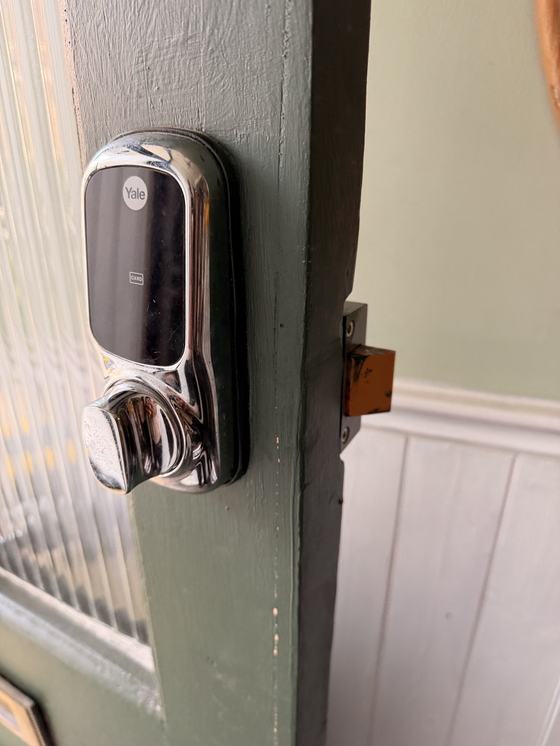
A traditional panelled timber front door with reeded glazing in its upper half. On it were two things: a Yale nightlatch, and above the glazing a Yale keypad lock that had failed. The customer was clear that he had not liked how it operated even when it worked — which matters, because a lock somebody finds awkward is a lock they stop using properly.
He had already chosen and bought the replacement. We are happy either way; if you have bought something already, tell us the make and model and we will say honestly whether it suits your door before anyone turns up.
Why the obvious position was the wrong one
The obvious move is to put the new lock where the old one was. Two things ruled that out, and both are the sort of thing you only see once you have the old lock off.
The timber there had already been cut about. Whoever fitted the Yale had chipped away a good amount of the door to make it sit right. That work was done and could not be undone; what was left in that area was noticeably less door than the rest of it.
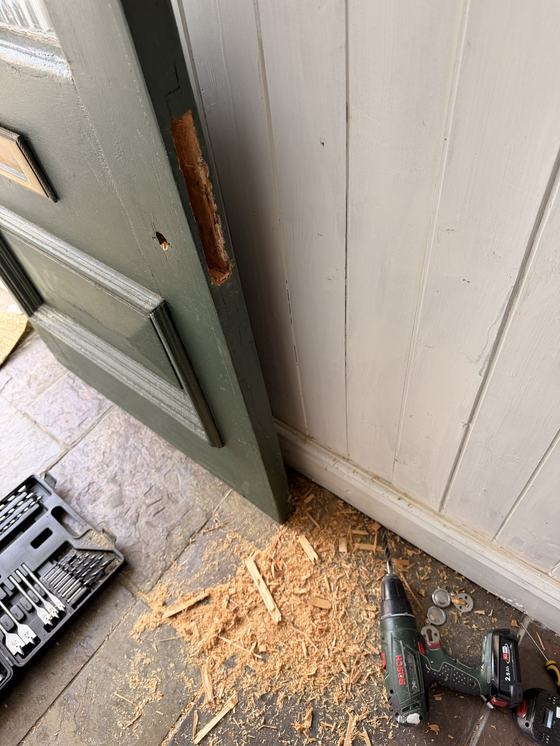
The new lock needed a much bigger pocket. The Vila's lock body is wide, and its deadbolt has to slide through the middle of the door edge. Cutting that mortice in the same place would have meant boring deep into timber that was already thin — and, going in that far in that position, risking the glazing above it. A cracked pane on a period front door is not a small problem to fix.
Fitting it lower, into sound timber
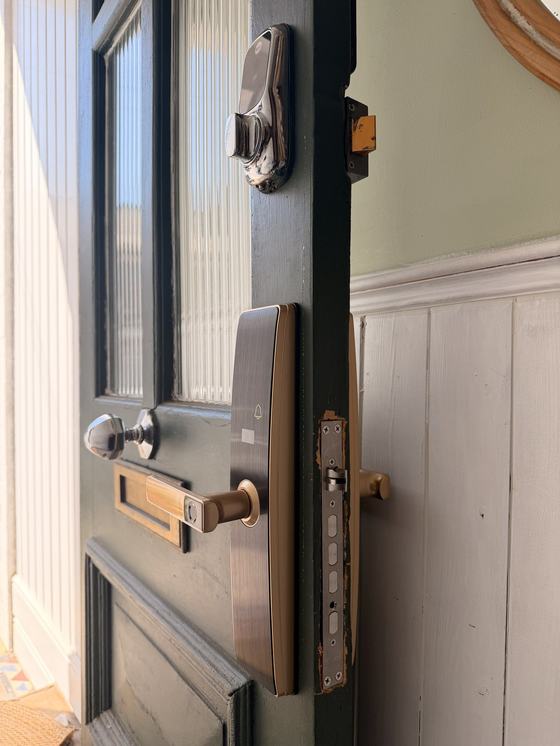
So the lock went in below the glazed section, into the solid part of the door where there was full thickness to work with and no glass anywhere near the drill. That put it at a natural handle height, which is where a handle wants to be anyway.
It is a small decision and it took longer to reach than to execute. It is also the difference between a lock that is fitted and a door that is quietly weakened.
Why the old lock is still there
You can see the old Yale in the photographs, still on the door above the new one. That was the customer's call and we think it was the right one. Taking it off would have left a set of holes and a patch of bare, chipped timber on the face of a door he likes. It does no harm where it is.
Not every job ends with the door looking factory fresh. Sometimes the tidiest outcome is the one that leaves the fewest scars.
Setting it up, and showing them how it works
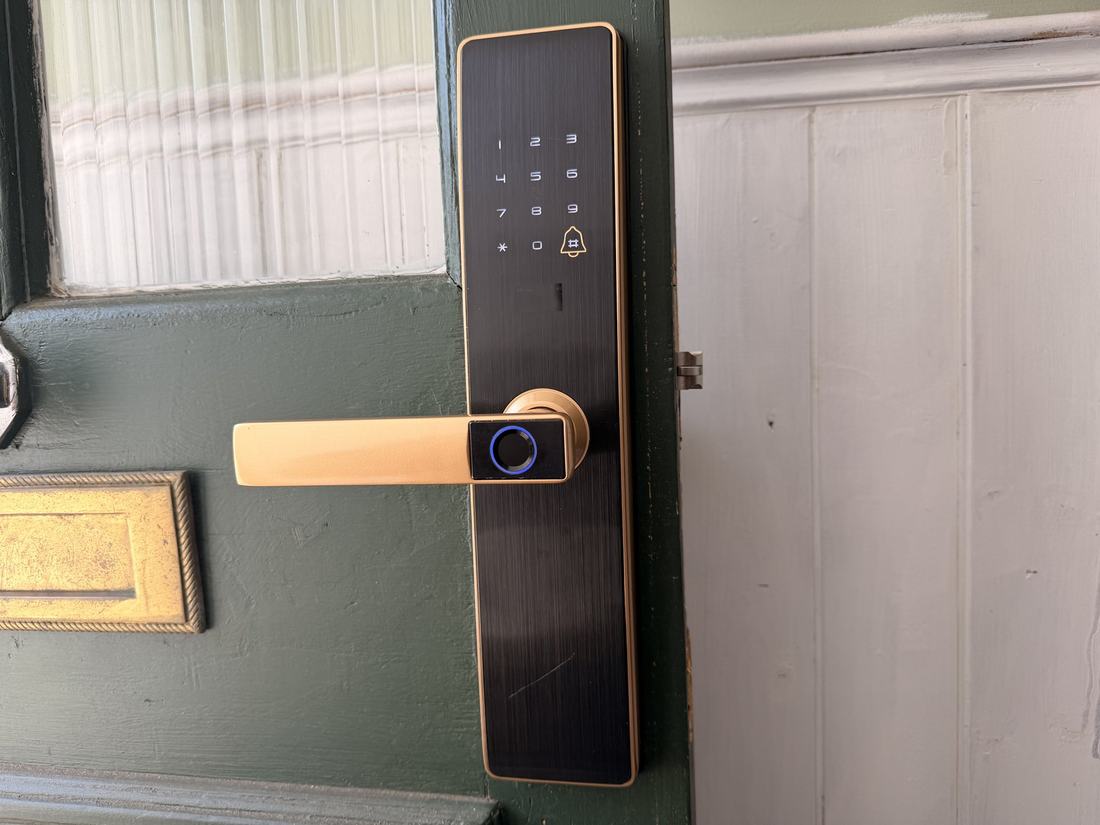
The Vila 569 opens four ways: fingerprint, PIN on the keypad, a card fob — it came with three — and the app, which runs on Tuya. We set all of it up, tested each one, and then spent the time showing the customer and his wife how to use them: how to add and remove a fingerprint, how to change a code, and what the keypad settings do.
That last part is not padding on the invoice. A smart lock that only one person in the house understands is a smart lock that causes arguments.
What the customer said
Henry was brilliant, very knowledgeable and great service. We are very happy with the new smart lock. He made sure it was all working and set up for us.
Left as a five-star Google review after the installation.
If you have a timber door
Timber doors are the interesting ones. Unlike uPVC and composite doors, which nearly all use the same multipoint mechanism and euro cylinder, every timber door is its own case — different thickness, different history of previous locks, and often glazing in exactly the place you would want to put something. There is more on how the two compare in our guide to smart locks on uPVC and composite doors.
If yours has had previous locks fitted, send a photograph of the door and its edge with your enquiry. That usually tells us what is possible before we arrive, and it is how this job was scoped.
Questions
Frequently asked
Usually yes — the glazing decides where the lock goes rather than whether it can go on at all. What matters is having enough solid timber for the lock body and the deadbolt, well clear of the glass. On this door that meant fitting below the glazed section rather than in line with the old lock.
It is common, and it is worth knowing before we start. Old cut-outs remove timber permanently, so the question becomes whether there is enough sound material left in that position — and if not, whether the new lock can go somewhere else on the door. That is a judgement made with the old lock off and the door in front of you.
Not necessarily. If removing it would leave visible holes or bare timber on a door you are happy with, leaving it in place is often the neater outcome. It is your door and your call — we will tell you what each option looks like when it is finished.
Yes, and plenty of people do. Send us the make and model with your enquiry and we will tell you honestly whether it suits your door before you commit to a date. If it does not, we would rather say so early than find out on the doorstep.
- Speed
- Same-day installationSubject to availability in your area
- Pricing
- Fixed-price quotesAgreed before we start, no callout fee
- Guarantee
- 12-month workmanshipWe come back and fix it, no charge
- Coverage
- Northwest, and UK-wideDay-to-day in the Northwest; further for larger jobs — see coverage
Get a fixed price for your door
Tell us the property and we'll quote it — no callout fee, no obligation.