 SmartLockPro
The question we are asked most often is whether a smart lock will work on a uPVC door. The answer is almost always yes — but the more useful question is which part of the door it replaces, because that is what decides which products fit, what they cost to fit, and whether the door still locks the way you expect afterwards.
Most front doors across Greater Manchester are uPVC or composite, and they nearly all lock the same way. Once you understand that mechanism, the whole market of smart locks divides neatly into the ones that will fit your door and the ones that never could.
How your door actually locks
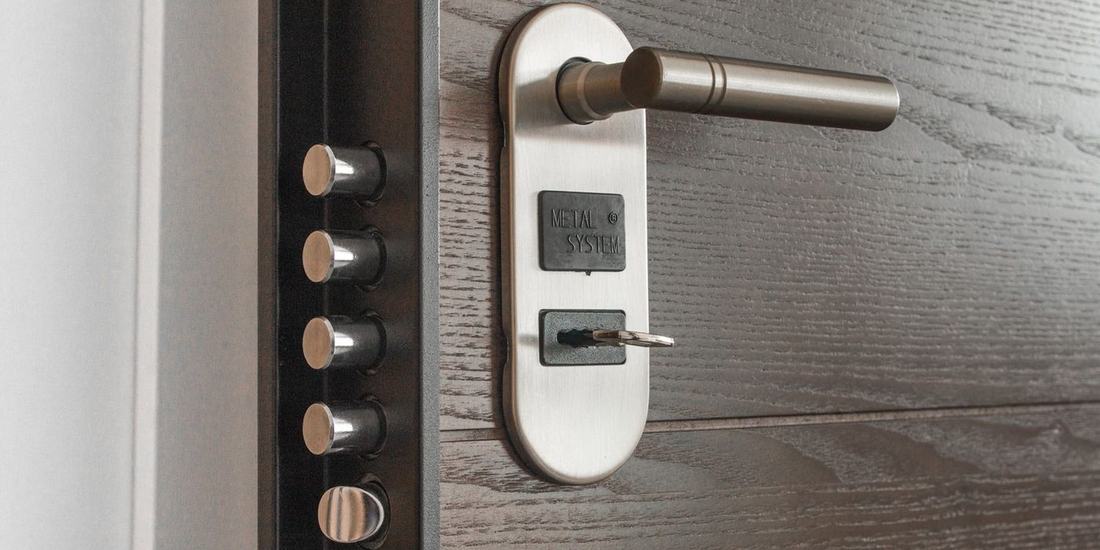
Behind the frame edge of a uPVC or composite door is a multipoint mechanism: a long strip carrying two or three hooks, rollers or bolts that engage the frame at several points up and down the door. Lifting the handle throws those points. Turning the key then deadlocks them so the handle cannot be dropped again.
The key itself turns a euro profile cylinder — the dumbbell-shaped barrel you can see edge-on when the door is open. That cylinder is a separate, replaceable part. It is not the lock; it is the thing that tells the lock what to do.
That separation is the whole reason smart locks work well on these doors. The mechanism doing the hard work stays where it is, and only the part that receives the instruction changes.
Code lock, keypad lock, electronic lock — do any fit uPVC?
These names describe how you open it, not what will go on your door. A code lock or keypad lock is one you unlock by typing digits; an electronic lock or digital lock is the same category described by its power source; access control usually means a setup managing several doors or several people rather than a single front door.
Any of them can work on a uPVC door — and any of them can be impossible on yours. What decides it is the multipoint mechanism described above, not the label on the box. A code lock built as a euro cylinder drops straight into most uPVC doors in twenty minutes. A keypad lock designed around a timber door's mortice will never fit one, however good it is.
So when you are comparing products, ignore the naming entirely and ask one question: which part of the door does this replace? Cylinder, handle set, or the whole mechanism. That answer, and the measurements further down, are what determine whether it fits.
So which smart locks fit?
Smart euro cylinders. These replace the cylinder and nothing else. A keypad, fingerprint reader or motor sits where your key used to go, and the existing multipoint mechanism is untouched. This is the usual answer for a uPVC or composite door, and it is the least invasive option — no new holes, and it can be reversed by fitting a conventional cylinder back in.
Keypad handle sets. These replace the handles on both faces along with the cylinder, giving a larger keypad and usually a fingerprint reader. They suit a door where you want the smart lock to be obvious and the hardware to match, and they need the existing screw centres and spindle to line up — which is a measuring job, not a guess.
What does not fit. The single biggest wasted purchase we see is an American-style retrofit that clamps over a round deadbolt thumbturn. Those are designed for a door with one deadbolt and no multipoint strip. They are sold widely online, they look excellent, and they will not fit a standard UK uPVC door. If a product's fitting instructions never mention a euro cylinder, be suspicious.
The measurement that decides everything
Euro cylinders come in many lengths, and they are measured from the centre — the fixing screw hole — outwards to each face. A cylinder described as 35/45 is 35 mm on one side and 45 mm on the other. Get it wrong and one of two things happens: it is too short and the cam will not reach the mechanism, or it is too long and it protrudes past the handle.
Protrusion matters more than it sounds. A cylinder standing proud of the escutcheon is the one thing that makes a door easier to attack, because it gives something to grip. A few millimetres is the difference between a secure door and an obvious weak point, which is why we measure the existing cylinder rather than ordering a common size and hoping.
Whichever side of the door your measurement is bigger on also matters — a cylinder fitted the wrong way round puts the long side outside, which is exactly what you are trying to avoid.
It will not lock itself unless your mechanism already does
This is the misunderstanding that causes the most disappointment, so it is worth being blunt about.
On a standard multipoint door, the hooks only engage when somebody lifts the handle. A smart cylinder can turn itself, so it can deadlock a door whose handle has been lifted, and it can unlock one on a code or a fingerprint. What it cannot do is lift the handle for you. Pull the door shut behind you without lifting, and you have a door held only on the latch, however clever the cylinder is.
Some doors have an auto-locking mechanism that throws the hooks as the door closes. On those, a smart cylinder genuinely does give you a door that secures itself. If self-locking is the reason you want a smart lock — and for short-lets and rentals it often is — the mechanism is the part to ask about, not the lock. Changing a mechanism to an auto-locking one is a separate job, and a perfectly reasonable one.
Three things worth checking before you buy
1. Does the door still shut cleanly? uPVC doors drop over time, and hinges go out of adjustment. If you have to lean on the door or lift hard to get the handle up, the hooks are binding against the keep plates. A motorised lock fighting a misaligned door will fail early and drain batteries fast. Adjusting the door first is cheap and makes everything after it work better.
2. How is the mechanism itself? Multipoint gearboxes wear out, and a stiff or graunchy handle is the warning. Fitting a smart cylinder to a mechanism that is close to failing is a false economy — when the gearbox goes, the door does not open, and the smart lock will get the blame it does not deserve.
3. What does your insurer ask for? Many home insurance policies specify a cylinder standard, commonly TS007 3-star or Sold Secure Diamond, and swapping a rated cylinder for an unrated smart one can quietly take your door below what your policy assumes. Rated smart cylinders exist. Read your own policy wording rather than relying on a general rule, including ours — the requirement varies between insurers.
Timber, composite and communal doors
Composite doors behave like uPVC here — they use the same multipoint mechanisms and euro cylinders, so the same options apply.
Timber doors are the ones that differ. Older Manchester housing stock often has a mortice lock and a nightlatch rather than a multipoint, which opens up a different set of products, including smart nightlatches that mount on the inside face and leave the outside of the door looking exactly as it did. On a period property that is often the deciding factor.
Communal entrance doors in flats are a different job again, with the freeholder or managing agent involved and fire door certification to respect. Your own flat's front door is usually straightforward; the building's is not a decision one leaseholder can make alone.
Questions
Frequently asked
A straight smart cylinder swap is within reach of a confident DIYer: one screw holds the cylinder, and the rest is the app setup. The parts people get wrong are measuring the cylinder correctly, spotting that the door needs adjusting first, and realising afterwards that the door does not lock itself because the mechanism is not auto-locking. None of those are difficult — they are just easier to see coming if you have done it before.
A cylinder swap does not. Nothing is drilled and nothing is cut, and a conventional cylinder can go back in at any point — which matters if you are renting, or if you might sell the door on with the property. A keypad handle set replaces the handles too, so it is more visible, but it still uses the existing fixings on most doors.
On most smart cylinders, yes — there is a key override on the outside, and we would encourage keeping one somewhere sensible. It is the one way in that needs no power, no phone and no signal. A few models have no keyway at all, which is worth knowing before you choose rather than after.
You get weeks of warnings first — app alerts, and usually a beep or a flashing keypad on entry. If it does run flat, a key override or emergency external power gets you in, and the inside handle works regardless, so nobody is ever shut in. On a rental the thing to arrange is not spare batteries but somebody whose job it is to notice the warnings.
Either. If you have already bought something, tell us the make and model when you enquire and we will say honestly whether it suits your door before anyone turns up. If you would rather we supplied it, we will recommend against your door and how you actually use it, not against whatever is in the van.
If you are not sure which mechanism your door has, you do not need to work it out yourself. Open the door, photograph the strip along its edge and the cylinder from the side, and send those with your enquiry — that is usually enough for us to tell you what will fit and what it involves. We install across Manchester and the Northwest, and every quote is fixed before any work starts.